Driving While Under the Influence of a Phone

Credit Melissa Wenger - Public Domain

Credit Melissa Wenger – Public Domain

Imagine driving into town. Your cell phone beeps and you take the call on your hands-free headset. You’re flagged down by the police, fined, have your driving privileges revoked and your car impounded. That’s what they do when you drink and drive. But you weren’t drinking, you just used your phone.

It used to be hard to imagine being arrested for driving and phoning. In spite of the evidence that driving while under the influence of a phone is equivalent to drinking and driving, we don’t want to give up our right to be talking. If only we could find a way to do it without having our driving impaired.

Credit Smallman12q - CC-BY

Credit Smallman12q – CC-BY

How impaired is it? According to a National Safety Council article, an estimated one in four crashes involves cell phone use. In tests on driving simulators, subjects who used the phone deteriorated just as if they were legally intoxicated. Their mistakes increased and their reactions slowed. This was regardless of whether the phone was handheld or hands-free. The problem is not just that your hands are busy. There’s something in the telephone conversation itself that affects one’s ability to drive safely.

Part of the problem is the simple act of trying to multitask, according to a New Atlantis article on the myth of multitasking. The way we do that is by switching back and forth among the tasks, because we can’t do everything at once and do any one thing well. The act of switching between tasks takes time; our brains just can’t do it instantly. The result is that we end up spending a lot of time between tasks, not attending to any of them.
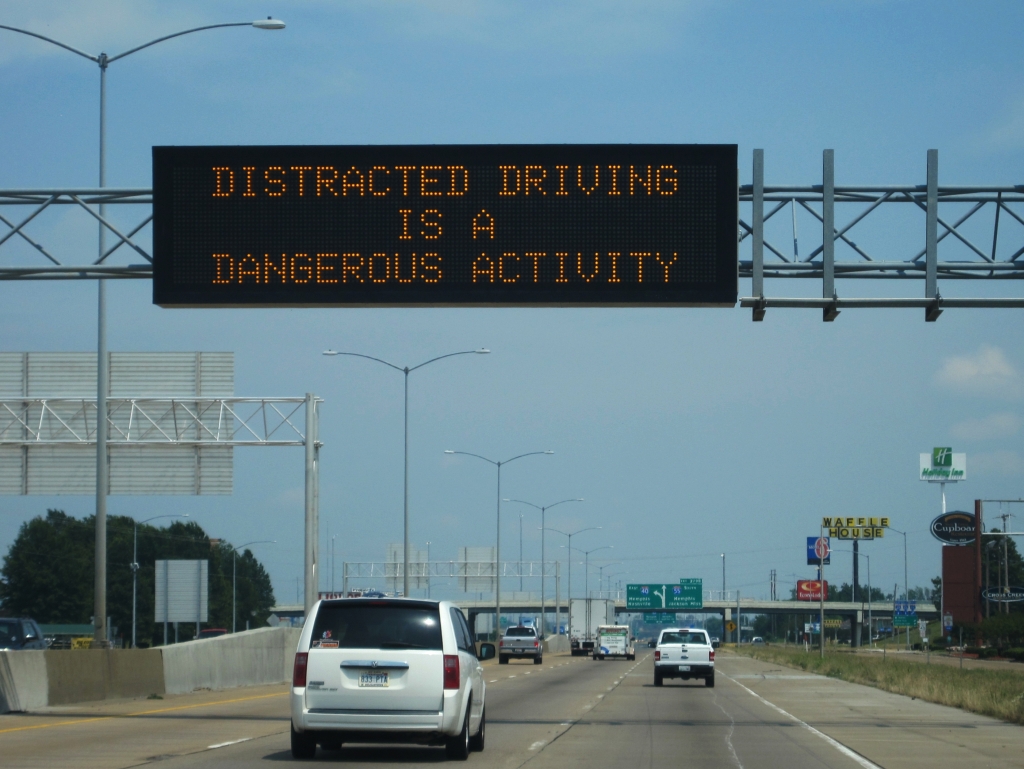
Credit - Thomas R Machnitzki - CC-BY - Is that sign ironic?

Credit – Thomas R Machnitzki – CC-BY – Is that sign ironic?

From the New Atlantis:

Multitasking might also be taking a toll on the economy. One study by researchers at the University of California at Irvine monitored interruptions among office workers; they found that workers took an average of twenty-five minutes to recover from interruptions such as phone calls or answering e-mail and return to their original task. Discussing multitasking with the New York Times in 2007, Jonathan B. Spira, an analyst at the business research firm Basex, estimated that extreme multitasking — information overload — costs the U.S. economy $650 billion a year in lost productivity.

Another problem is that we tend to give a lot of attention to conversation. It’s an important aspect of our lives. Our brains automatically give it a high priority. That means there’s less attention available for driving.

Many countries have enacted legislation on cell phones in cars. It ranges from an outright ban on using one in a moving vehicle to allowing unlimited usage, but penalizing the phone user if there’s an accident. Legislators won’t be able to ignore the statistics. They’ll have to come up with some kind of response to the growing damage, injury and death caused by phoning and driving. Let’s hope it solves the problem without taking away our phones. The solution might be hands-free driving.

rjb

Posted in Uncategorized | Tagged , , , , | 6 Comments

Ants in the Devil’s Garden

lemonantScientists are still making novel discoveries in the Amazon jungle. There’s still plenty to learn, even about ants. Two species of ant discovered recently have evolved in intriguing ways. The first species is interesting for its horticultural practises.

There are areas in Amazonia where almost nothing grows except one species of tree, Duroia hirsuta. It’s much shorter than surrounding trees, being only a few meters tall. These strange patches, as much as a few hundred meters wide, look like orchards. They look as if someone has cleared the forest and planted this one type of tree.

devilsgarden2The local people know they didn’t do it and they didn’t see anyone else do it. The effect is apparently so spooky that local legends call the sites devil’s gardens, attributing their existence to an evil spirit. It’s not evil spirits, though, but ants that are responsible for the devil’s gardens. A species of ant called Myrmelaschista schumanni lives in the hollow stems of the D. hirsuta trees and they destroy all the competition. They rely on their host trees for shelter and food and they take extreme measures to protect them.

Their strategy is very successful. Some of the oldest gardens are calculated to be over 800 years old. The millions of worker ants kill the unwanted plants by injecting formic acid into their leaves. The researchers showed it was the ants by planting other species of trees and then protecting some and not others. The unprotected ones started to die within a day while the protected ones survived. This quashed the competing hypothesis which held that the D. hirsuta was inhibiting the growth of other plants by releasing chemicals.

The other ant species (Cephalotes atratus) is interesting because of its gliding ability, even though it doesn’t have wings.

The research in this case was on mosquitoes and the researchers were thirty meters up in the forest canopy waiting to get bitten. Ants, going about their normal business, encountered the humans and naturally attacked to protect their territory. When they were brushed off, instead of just falling they were seen to glide back to the tree trunk. They might bounce off once but they would glide back in again and most of the ants would get back safely to the tree. The researchers concluded that the ants were using their flared heads to glide.

gliding-antAnts join the list of species capable of wingless flight. Like flying squirrels, lizards, frogs and snakes, these ants have evolved the ability to maneuver in the air even without wings.

rjb

Posted in Uncategorized | Tagged , , | 7 Comments

Apostrophe

Credit Graham Horn - CC-BY-SA

Credit Graham Horn – CC-BY-SA

Grammar of the Day – Apostrophe

note: Dana Sallow kindly recommended another grammar website that they found both amusing and useful to them as a non-native English speaker. (See their comment below) The issue covered in this post from a Website Planet blog by Joshua Bromley is homophones. That is, words that sound alike but have different meanings.

Okay, so it’s really punctuation. I’m using it anyway.

The way the apostrophe is being used today has me nervous, afraid this sentence might turn out like this: The way the apostrophe i’s being used today ha’s me nervou’s, afraid thi’s sentence might turn out like thi’s. Sometimes it seems as if people just throw one in if the word ends in an ‘s.’

Credit Dirk Ingo Franke - CC-BY

Credit Dirk Ingo Franke – CC-BY

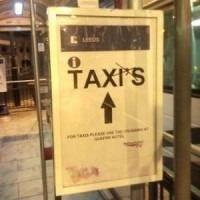
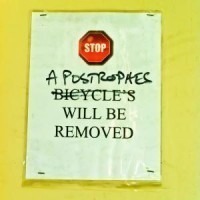
Granted that’s a bit extreme. But it’s not completely ridiculous. Just look at the epidemic of apostrophes happening now, especially on the Internet. Possibly the worst example is the use of an apostrophe to denote plurality. You see it everywhere, even in places where you’d least expect it. I frequent a forum called MobileRead. It’s populated by people who read. A lot. They love reading. They love talking about reading. They love writing about reading. And I often see sentences like, “How many book’s did you read last year?” there. I’m only slightly mollified by the fact that for many of the people there, English is not their first language. That only means that we’re starting them off on the wrong foot.

remedys
In my own town there’s a drug store called “Remedy’s.” So far I haven’t met the proprietor, Mr Remedy. I suspect he resented English class in school.

Here are a couple of links to the Quick and Dirty Tips website. One on the history of the apostrophe, and the other on when to use an apostrophe. Spoiler alert: the history of the apostrophe is not entirely rational. I wouldn’t be surprised if it eventually became okay to use it for plurals. Plural’s? In fact, the posts above have examples of where we used to use them for some plurals, but don’t now. And where we still do use them for special plurals. It’s no wonder people get confused. And some get even.

Grammar is evolving. What is correct now was not always correct. What is correct in one place is not necessarily correct everywhere. But that is no excuse for not using what is correct here and now.

March 4th is National Grammar Day (America.)

rjb

Posted in Uncategorized | Tagged , , | 3 Comments