Alfred Wegener

Alfred Lothar Wegener was born in Berlin, Germany on November 1st, 1880. He was the youngest of the five children of Richard Wegener, clergyman, theologian and classical language teacher. The family was well-off enough to own a vacation home, as well as to afford to educate all their children. Alfred did very well in school and went on to study physics, meteorology and astronomy. He got a doctorate in astronomy in 1905, but had formed a strong interest in the growing disciplines of climatology and meteorology.

Public Domain

Wegener made four expeditions to Greenland in his study of the polar climate, the first in 1906. He built a weather station and made observations using kites and tethered balloons, in addition to the usual instruments. He had his first experience with the killing harshness of Greenland’s climate when the expedition leader and two others died while exploring. He returned to Germany in 1908.

His second expedition to Greenland in 1913 began with a calving glacier that almost wiped it out, and ended with a fortunate and unlikely rescue as their crossing of the interior resulted in their having to eat all of their dogs and ponies before its completion.

His military service in World War One lasted only a few months. He faced fierce fighting, was injured twice and declared unfit for duty. He spent the rest of the war in the meteorological service and published 20 papers by its end. Having published on his ideas about continental drift for the first time in 1912, Wegener followed up with a major work — “The Origin of Continents and Oceans” — in 1915. Interest was small.

After the war he worked as a climatologist and as senior lecturer at the University of Hamburg. In collaboration with Milutin Milankovich, he did pioneering work in a field that would become known as paleoclimatology, where they reconstructed ancient climates. He published the third edition of “The Origin of Continents and Oceans,” provoking discussion of his theory of continental drift, and disparagement by the experts of the day.

By 1924 he attained a position that provided stability for his family, and he was able to concentrate on his studies for the rest of the decade. In 1926 he presented his ideas on continental drift at a symposium in New York, to near-uniform rejection. In 1929 he published the fourth and final edition of “The Origin of Continents and Oceans,” and made his third expedition to Greenland.

Wegener led the 1930 Greenland expedition, his fourth, and his sense of personal responsibility ultimately led to his death. A combination of a late thaw and harsh conditions resulted in the failure of a re-supply mission and the death of Alfred Wegener. His body remains buried where he died.
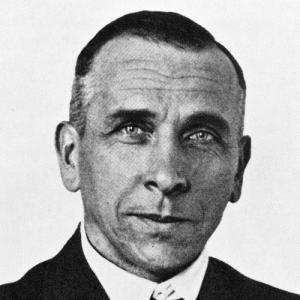
Public Domain

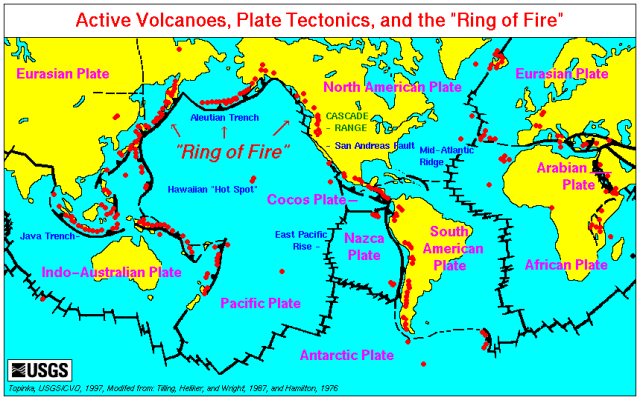
Alfred Wegener was accomplished at astronomy, meteorology and climatology, but what he is known for today is continental drift. We’ll cover that in more detail in future posts.
rjb

Posted in Uncategorized | Tagged , , , , , , , , | Leave a comment

Idioms

Credit Tjo3ya – CC-BY-SA

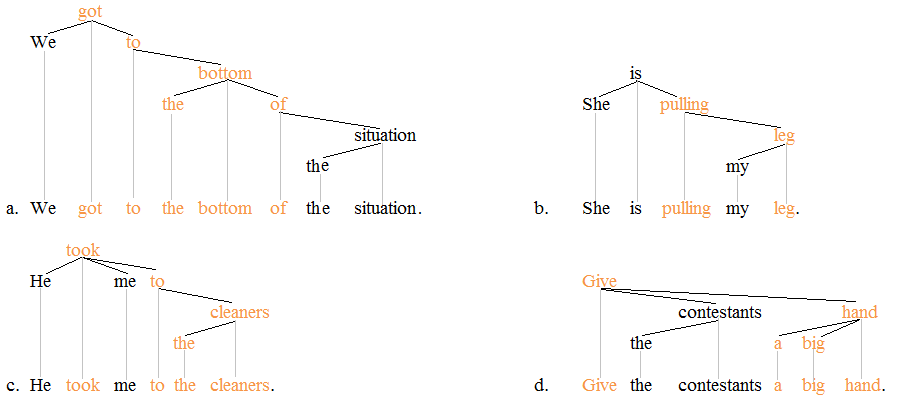
I wasn’t sure how to kick off this post, so I’ve been skirting the problem. Now I’ve decided to stop beating around the bush and take the bull by the horns. The objective is to get to the bottom of things without going over the top. I hope I don’t get run down trying to run down the rundown so I can run it up the flagpole and run it by you.

An idiom, according to my Concise Oxford Dictionary, Eighth edition 1990, is “a group of words established by usage and having a meaning not deducible from those of the individual words.” In other words, a phrase that doesn’t make sense in its current usage. Their examples are, “over the moon” and “see the light.” An idiom is also “a form of expression peculiar to a language, person or group of people.” So to speak in the idiom is to use forms of speech that are particular to the speaker’s in-group. Idioms are the bane of anyone trying to learn a language. Imagine trying to learn English and someone says, “Here, let me show you the ropes.” Yes, “idiom” does come from the same place as “idiot.”

I have to admit that would be a tough row to hoe. Maybe I should have left well enough alone, but the cat’s out of the bag now, so it’s a little late to close the barn door. The horses have flown the coop. Wait, is that a mixed idiom? Was I champing at the bit in my teeth, causing me to overshoot the mark? That can’t be helped, I’m afraid. Any attempt at tamping this down is a day late and a dollar short. We’ve rounded the last turn. We’re on the final stretch. There’s no turning back because we’re down to the short strokes. The die is cast and our fate has been cast to the wind. This post is done and it’s time to play the last post for it.

Catch you on the round-a-bout,

rjb

Posted in Uncategorized | Tagged , , | 6 Comments

Conspiracy Theories While You Wait

Lorie Shaull (Flickr) / Creative Commons

The website FactCheck.org has a look at the conspiracy theories that have arisen, and have been promulgated deliberately, after the mass murder and terrorization of school children in the United States on Valentine’s Day 2018. Initially the murderer was the focus of the rumors, but after the surviving children began calling for better gun controls, the conspiracy theories became about them. The gun proliferation advocates began to attack the credibility of the survivors who were speaking out.

The internet has been rife with rumors about the school shooting that left 17 dead in Florida on Feb. 14. We’ve debunked several of them.

Initially, the rumors focused on the alleged shooter himself, Nikolas Cruz. But, as students who survived the shooting started advocating stricter gun controls, new rumors focused on the most vocal among them. Those falsehoods grew into full-fledged conspiracy theories, one of which briefly topped the list of trending videos on YouTube.

Go to FactCheck.org for the rest of the story, and go to WNPR to hear an interview with with people covering this story. Here is a direct link to the interview. Total time: 49:23. This story starts at about the nineteen minute mark.

via School Shooting Spawns Conspiracy Theories – FactCheck.org

Posted in Uncategorized | Tagged , | Leave a comment