Elgin’s Synesthesia

Credit Filipe-Simões

Synesthesia of the Day – Elgin’s Synesthesia

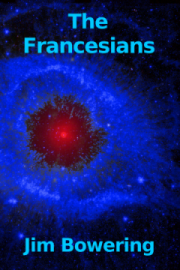
Elgin, like the other inhabitants of Green Comet, is a synesthete. I refer to that fact a few times during the novel, and in the sequel, Parasite Puppeteers. I don’t go into a lot of detail about the types of synesthesia the individual characters have, although I do imply that they each have at least two types. Given the rudimentary stage synesthesia research is at now, and even more so when I was writing it, I didn’t think it was wise to nail it down too precisely in the story. And given that the characters have multiple strong synesthesias, I doubt that the interactions and synergies among them would lend themselves to the tentative, simplistic classifications we’re developing now. However, given all that, I think I should offer my idea, the thing I’m thinking of when I imagine Elgin’s synesthetic perceptions.

Elgin’s most obvious synesthetic trait is the way he feels in his body when he sees an example of good engineering or construction. For instance, when Minder takes him out and he sees the new corridors and how well they’re made, he has the sensation of all his bones being properly aligned in his body. A very comforting sense of rightness. I haven’t found one type of synesthesia that fits this perfectly, but it is somewhere in the vision to touch, proprioception and kinetics area. He feels what he sees on many levels: simple touch, deeper orientation and subtle movement.

This goes beyond a simple integration of physical sensations. When he looks at an engineering paper and immediately knows if it’s right, the role of vision is taken by concepts and ideas. Inner visions. But the principle is the same. What he “sees” is experienced as “feeling.” The same applies to more general situations. As long as he has enough data, enough information, he can tell if something is right. Not in any moralistic sense of right or wrong, just whether it’s right. For instance, when Frances and Buzzard explain to him how Green Comet is in danger from the Visitor, he instantly knows that they’re right, because it feels right.

So, for lack of anything better, let’s call Elgin’s synesthesia Seeing-Feeling Synesthesia. This web page doesn’t address it perfectly, but it provides some good food for thought. And here’s a pretty good site for exploring the types of synesthesia.

rjb

Posted in Uncategorized | Tagged , , , , , | Leave a comment

Microsculpture – The Insect Portraits of Levon Biss

levon-biss-jewel-longhorn-beetle-640x280

Levon Biss is a successful commercial photographer. His work has been used in advertising, on magazines and in a book about soccer. Now he has an exhibition of his images of insects, showing the Oxford University Museum of Natural History’s insect collection in stunning detail. The exhibition runs from May 27 to October 30, 2016, and it’s called Microsculpture. The prints range in size up to three meters, each an image of a tiny insect captured down to the finest detail.

These are not just snapshots of pretty bugs. Each image takes about three weeks to complete. He shoots each insect in sections — about thirty on average — and then compiles the shots into a single, complete image. In all, he shoots 8,000 to 10,000 photographs of each bug, then combines the best parts of them into the final product. He needs to get the lighting and the focus just right for each tiny part, so the whole image can be perfectly lighted and focused. Since the depth of field is so small with a microscopic lens, he can only move the camera ten microns between shots. That’s not much more than a tenth of the width of a human hair.

If you want to see the detailed originals of these small samples, follow the links to Levon Biss’s Microsculpture website. There you can see the light reflecting off the individual cells of compound eyes, and count the hairs on little buggy legs. There’s also a video that shows how he did it.

All photos copyright Levon Biss.

rjb

Posted in Uncategorized | Tagged , , , , , | 3 Comments

VocalID Certificate

VocalID Certificate

VocalID Certificate

I got a certificate! VocalID gave me a certificate to reward my efforts, and to encourage more. VocalID is an initiative whose goal is to provide unique voices to people who can’t speak on their own. They need devices that can synthesize a voice for them, and VocalID wants to let them choose their own rather than settle for one of the generic ones. See my original post on VocalID.

Watch Rupal Patel’s TED Talk and get inspired.
Visit VocalID’s website to see what they’re about.

VocalID is looking for people to join their Summer Ambassador Fellowship Program. Do you know any students who are looking for a good cause this summer? See about it here.

Maybe they can get a certificate, like me!-)

rjb

Posted in Uncategorized | Tagged , , , , | Leave a comment