Other Beauty

Photo Credit - Oliver Photo Club

Photo Credit – Oliver Photo Club

Another offering from the Oliver Photo Club, called Cornucopia of Colour.

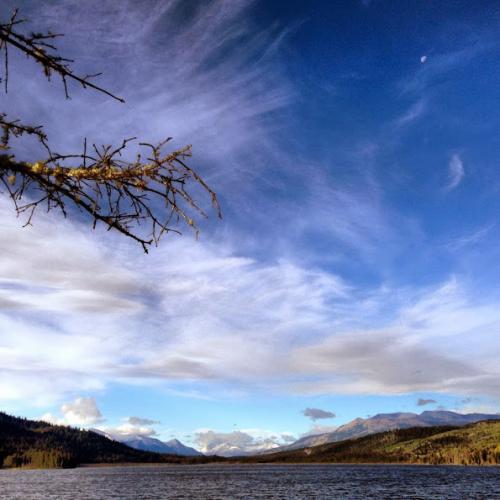
Commenter Laird Smith is right: there is beauty in Alberta, too. Below is a shot taken at Grande Cache, Alberta, almost five hundred kilometers west of where Laird lives. Can anyone identify the clouds in the picture?

Photo credit - Leets Hallock

Photo credit – Leets Hallock

It’s nice to see these pictures, to see what beauty is like for other people in other places.

rjb

Posted in Uncategorized | Tagged , , | 12 Comments

Oliver Photo Club

Photo credit - Oliver Photo Club

Photo credit – Oliver Photo Club

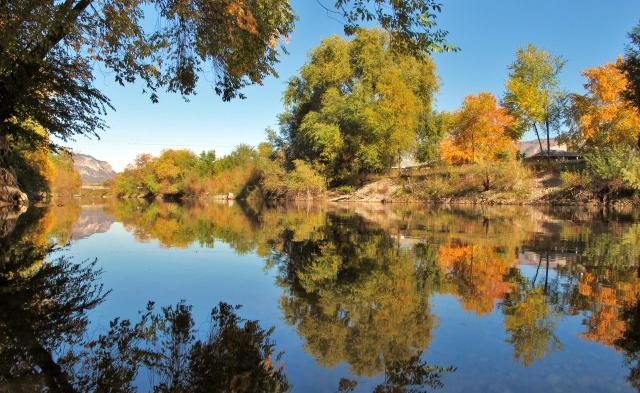
Where I live we often get extended periods of beautiful weather in the autumn. Like now, there will be days on end where the nights are cool and the days are sunny. Those two things can contribute to the development of rich autumn colors, as seen in this post’s header photo, taken along the local river. Luckily for me, and consequently you, Oliver has a small army of dedicated photographers who are willing to share this beauty with us. I plan to post many pictures from the Oliver Photo Club on Green Comet, along with links back to their website where you can often find large versions of them to enjoy. Just click on the picture when you get there, and you’ll get the full image if there is one.

The second picture shows an orchard of cherry trees preparing for their long winter sleep.

Photo credit - Oliver Photo Club

Photo credit – Oliver Photo Club

The final photo faces southeast from the west side of the valley, catching the rising sun.

Photo credit - Oliver Photo Club

Photo credit – Oliver Photo Club

I hope you enjoy these pictures, and be sure to visit the Oliver Photo Club website to see more.

rjb

Posted in Uncategorized | Tagged , , | 11 Comments

Cirrocumulus

Photo credit - King of Hearts CC-BY-SA

Photo credit – King of Hearts CC-BY-SA

Cloud of the Day – Cirrocumulus

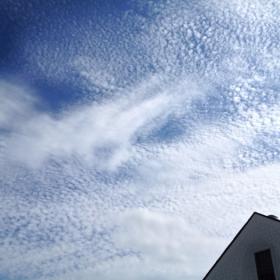
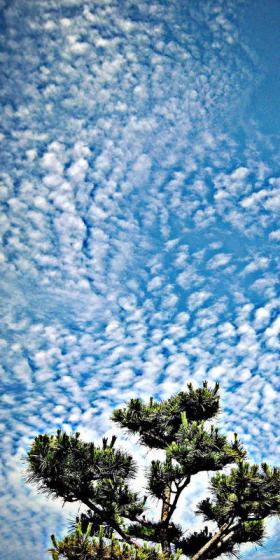
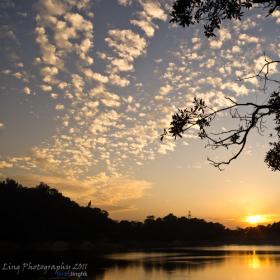
In keeping with stratocumulus and altocumulus in the lower levels, cirrus clouds in the high etage (over 20,000 feet) have a cumuliform species – cirrocumulus. As with the other two, cirrocumulus is formed by convective processes, the vertical development giving the individual cloudlets their heaped appearance. When arranged properly, cirrocumulus takes on the appearance of fish scales, making it the “mackerel scales” in the “Mares’ tails and mackerel scales . . .” proverb. Another arrangement gives the appearance of ripples in the sand.

Photo credit: Dimitry B/Foter/CC-BY

Photo credit: Dimitry B/Foter/CC-BY

Photo credit - © Todd Ellis

Photo credit – © Todd Ellis

It’s often difficult to distinguish between cirrocumulus and altocumulus, with the same cloud formation sometimes being both simultaneously. The only thing setting them apart might be that part of the formation is below 20,000 feet, while the rest is above.

Photo credit: FooNar/Foter/CC-BY

Photo credit: FooNar/Foter/CC-BY

Photo credit: z00mpics/Foter/CC-BY-NC-ND

Photo credit: z00mpics/Foter/CC-BY-NC-ND

Cirrocumulus might contain some super-cooled water droplets, but they’re not very long-lived, soon turning to ice crystals. Cirrocumulus is usually a transition phase between cirrus (mares’ tails) and cirrostratus, as the cloud thickens and the weather system moves in.

Photo credit: LingHK/Foter/CC-BY-NC-SA

Photo credit: LingHK/Foter/CC-BY-NC-SA

Photo credit - NOAA

Photo credit – NOAA

Cirrocumulus might produce some precipitation, but only in the form of virga, which never reaches the ground. It can be an indicator, though, of precipitation to come, as the clouds thicken and lower.

Photo credit - Gerry-Millet

Photo credit – Gerry-Millet

rjb

Posted in Uncategorized | Tagged , | 1 Comment