Credit TJP Finn – CC-BY-SA
To mark the Solstice, which is just about now by my clock, I’m going to point to a well-received earlier post on the subject. To return to the adventures of Thud, son of Thog, here is Solstice.
rjb
Credit TJP Finn – CC-BY-SA
To mark the Solstice, which is just about now by my clock, I’m going to point to a well-received earlier post on the subject. To return to the adventures of Thud, son of Thog, here is Solstice.
rjb

Image credit – Abestrobi – CC-BY-SA
Another non-cloud cloud of the day, sprites are electrical phenomena. They emanate upward from the tops of thunderclouds, as lightning plays around the bottoms. Sprites weren’t caught on film before 1989, and only seriously pursued since then. With intense sprite hunting, and especially with the excellent view from the International Space Station, the database is growing.

image credit – NSF

image credit – NSF
Sprites last for a very short time – about a thousandth of a second. Their elusive and fleeting nature is what led to their name. They’re big, though. They extend about ten times as far above the cloud tops as lightning does below the bottoms, and they can span hundreds of kilometers. They are also unlike lightning in that they are composed of cold plasma, rather than hot. Nevertheless, we hope there is no precipitation.
rjb
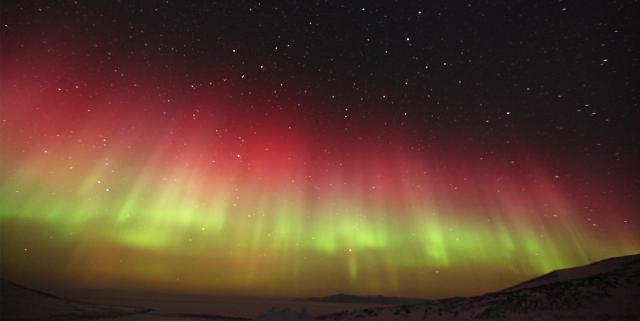
Photo credit – Deven Stross CC-BY-NC-ND
Aurora is not clouds. Clouds can’t form in the tenuous wisps of atmosphere found at the heights, approximately 90 – 1,000 kilometers, where aurora occurs. Therefore, it is wrong for me to call aurora the cloud of the day. Naughty me. It’s a meteorological phenomenon, and it’s beautiful. I’ll call it the cloud of the day if I want.

Photo credit – Alan C Tough

Photo credit – Andia Frh

Photo credit – 14jbella
Click image for huge poster
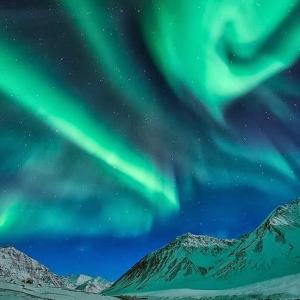
Photo credit – John Freddy

Photo credit – Aaron Kaase – Public domain
rjb

ISBN 978-0-9919532-0-2