Snowflakes

Snowflakes and ice crystals

Snowflakes and ice crystals

Wilson Bentley is widely acknowledged as the pre-eminent pioneer in snowflake photography. Snowflakes are formed by the aggregation of ice crystals in the atmosphere. If the ice crystals form independently and don’t join to form snowflakes, they can appear as a phenomenon known as diamond dust, where they glint in the sunlight as they gently waft down through the lower atmosphere. Ice crystals higher up interact with the light to form haloes and other optical phenomena around the Sun or Moon.
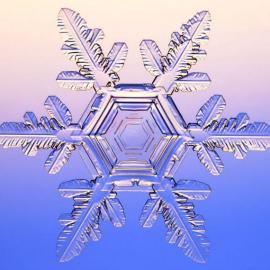
011902-a133a-270020302-b030-270020202-a120-270030502-a028-270Today’s post is about photography of snowflakes and the related ice crystal formations involved with them. I’ve included a few sample images and a list of links that you can visit to see more. The person in the first link, Alexey Kljatov, shares his techniques for budding snowflake photographers. Enjoy the beauty.

chart-Alexey-Kljatov-500ig35-180fig1d-180blue-180Alexey Kljatov
Pam Eveleigh
Detached Retina
fwwidall
Mark Cassino
david drexler
Ken Libbrecht
linden.g
ChaoticMind75

Let it snow.

rjb

Posted in Uncategorized | Tagged , | 2 Comments

Solstice – Reprise

Credit TJP Finn – CC-BY-SA

In Ireland there is a stone structure called Newgrange which has been dated to more than 5,000 years before present. This megalith – literally, big stone thing – is built in a circle, like its famous English cousin, Stonehenge. Both of them are built so as to mark the position of the Sun precisely at winter solstice. Newgrange is a few centuries older than Stonehenge, but they served much the same purpose: to provide a place where people could monitor and probably celebrate the passing of the solstice.

To mark the Solstice, which is just about now by my clock, I’m going to point to a well-received earlier post on the subject. To return to the adventures of Thud, son of Thog, here is Solstice.

rjb

Posted in Uncategorized | Tagged , , , | Leave a comment

Sprites

Image credit - Abestrobi - CC-BY-SA

Image credit – Abestrobi – CC-BY-SA

Cloud of the Day – Sprites

Another non-cloud cloud of the day, sprites are electrical phenomena. They emanate upward from the tops of thunderclouds, as lightning plays around the bottoms. Sprites weren’t caught on film before 1989, and only seriously pursued since then. With intense sprite hunting, and especially with the excellent view from the International Space Station, the database is growing.

image credit - NSF

image credit – NSF

image credit - NSF

image credit – NSF

The National Science Foundation article of 2009 referred to both red and blue sprites, but by 2013 they’d been separated into (red) sprites and blue jets. They’re part of a group of atmospheric phenomena called transient luminous events (TLE) which include, yes, elves. Scientists can be so whimsical.

Sprites last for a very short time – about a thousandth of a second. Their elusive and fleeting nature is what led to their name. They’re big, though. They extend about ten times as far above the cloud tops as lightning does below the bottoms, and they can span hundreds of kilometers. They are also unlike lightning in that they are composed of cold plasma, rather than hot. Nevertheless, we hope there is no precipitation.

rjb

Posted in Uncategorized | Tagged , , | 4 Comments