Dewy-eyed

Photo credit - Miroslaw Swietek

Photo credit – Miroslaw Swietek

This could almost count as a cloud-of-the-day post, since dew is a meteorolgical phenomenon. But let’s not get dewy-eyed about that. Instead, let’s get dewy-eyed about dewy-eyed insects.

Miroslaw Swietek took a serious interest in photography when he was thirty-five, and within a couple of years this talented amateur was producing photographic artwork to challenge the professionals. He captures these images by going out into the forest between 3AM and 4AM, to catch his subjects when they are immobilized by the cold. Then he sets up his macro lens within centimeters of them and brings us these beautiful portraits.

I strongly advise you to follow these links to two of Miroslaw Swietek’s online repositories, where you will find many more high resolution photos. Caution: may contain spiders.-)

rjb

Posted in Uncategorized | Tagged , , , , | 3 Comments

The River

river-header

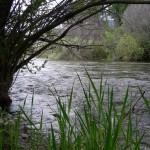
There’s a river at the bottom of my yard. It flows from right to left. You can just see it through the trees.

river-bottom-yard

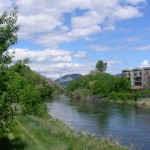
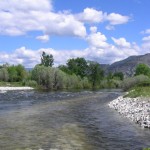
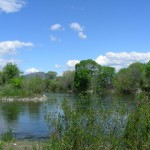
The river in this part of the valley is channeled, dikes keeping the water from spreading out, and drop-structures controlling the flow. From here, south to the lake, is a natural floodplain. You can still see the old oxbows, remnants of the meandering river that used to run here. Without the channel, all the bottom land would be under water this year.

The flood control installed here a hundred years ago has served its purpose well. It has prevented periodic flooding and made farming a reasonable occupation. That comes at a cost, of course. The channel provides no good habitat for the salmon that use this river. And the land doesn’t get the periodic fertilization that comes with flooding. I can’t see us reinstating flooding, but we have begun some habitat restoration. The restoration project finished phase two last year: reconnecting a portion of the original river channel. This area now provides excellent rearing habitat for young fish, including steelhead trout.

This year I’m especially glad that we have flood control. As I hope you can see from the photos, the river is very high. I don’t recall seeing it this high before. If anyone knows better, I hope you’ll let us know in the comments.

rjb

Posted in Uncategorized | Tagged , | Leave a comment

Mammatocumulus

Photo credit - Euclid vanderKroew - cc-by-nc-sa

Photo credit – Euclid vanderKroew – cc-by-nc-sa

Mammatocumulus are impressive clouds. They are described as eerie, even foreboding. When you see them you get the feeling that something powerful is behind them, that something is going to happen. It’s true. Something powerful is there.

Mammatocumulus are associated with cumulonimbus, the most powerful of clouds. These are the thunderclouds, the ones that go boiling up, growing to great heights, getting so thick that sunlight can’t get down to their black bases. When they get so tall that they can’t grow any more, the wind up there blows their tops sideways, into the anvil characteristic of their cloud type. Once clear of the column of rising air, the saturated air in the anvil sinks. When there is enough moisture in this cold, sinking air to outlast the heating that results, clouds form in the lower atmosphere. pushing down into those ominous bulges. Mammatocumulus is a rare cloud that forms in sinking air rather than rising air. What gives mammatocumulus those well defined pouches is the air rising back up in the interstices between them.

Anvil cloud - Credit - Sfortis - cc-by-sa

Anvil cloud – Credit – Sfortis – cc-by-sa

There is definitely precipitation associated with mammatocumulus, though it comes not from them so much as from the cumulonimbus accompanying them. Along with the lightning and thunder and downdrafts and other severe weather. And finally, yes, mammatocumulus are so named because of their appearance.

rjb

Posted in Uncategorized | Tagged , , | 2 Comments