Half Life

Cover copyright  Najla Qamber Designs

Cover copyright Najla Qamber Designs

SL Huang

SL Huang

Review – Half Life – SL Huang CC-BY-NC-SA

Available at Unglue.it, Amazon, Barnes and Noble, Kobo

Author’s website

Cas Russel is back, and she’s up to her old tricks, in SL Huang’s novel, Half Life. She’s still a thief, “retrieving” items for people, regardless of who actually owns them. She’s still a math savant, using her remarkable talent almost as a superpower. And she’s still a young woman trying to learn how to be a good person, providing it doesn’t interfere with business. When the story begins, she’s gone sixty-three and two-thirds days without killing anyone. She thinks that’s pretty good.

Half Life is the second novel in a series by Ms Huang called Russel’s Attic. The first one, Zero Sum Game, I reviewed here not long ago. She’s already working on the next two. In Half Life her protagonist, Cas Russel, finds herself up to her neck in trouble. Again. The novel is packed with action as she tries to work her way out of it. It would be easier if she didn’t have to factor in caring about people and what happens to them. That didn’t use to be a problem, but she’s trying to be a better person, which keeps adding unaccustomed complexity to things.

Even worse is the fact that this problem involves a child, and Cas has a soft spot for children in trouble. This interferes with her normally reliably rational thinking, making things even more difficult. It doesn’t help that this beautiful five year old girl isn’t quite what she appears to be.

If you like action novels and/or characters who develop and evolve, then Half Life is worth your attention. The beauty of its Creative Commons license is that you can read it first and decide later if you want to pay for it.

Go ahead and download it. It won’t cost you anything and you might find you like it.

rjb

Posted in Uncategorized | Tagged , | Leave a comment

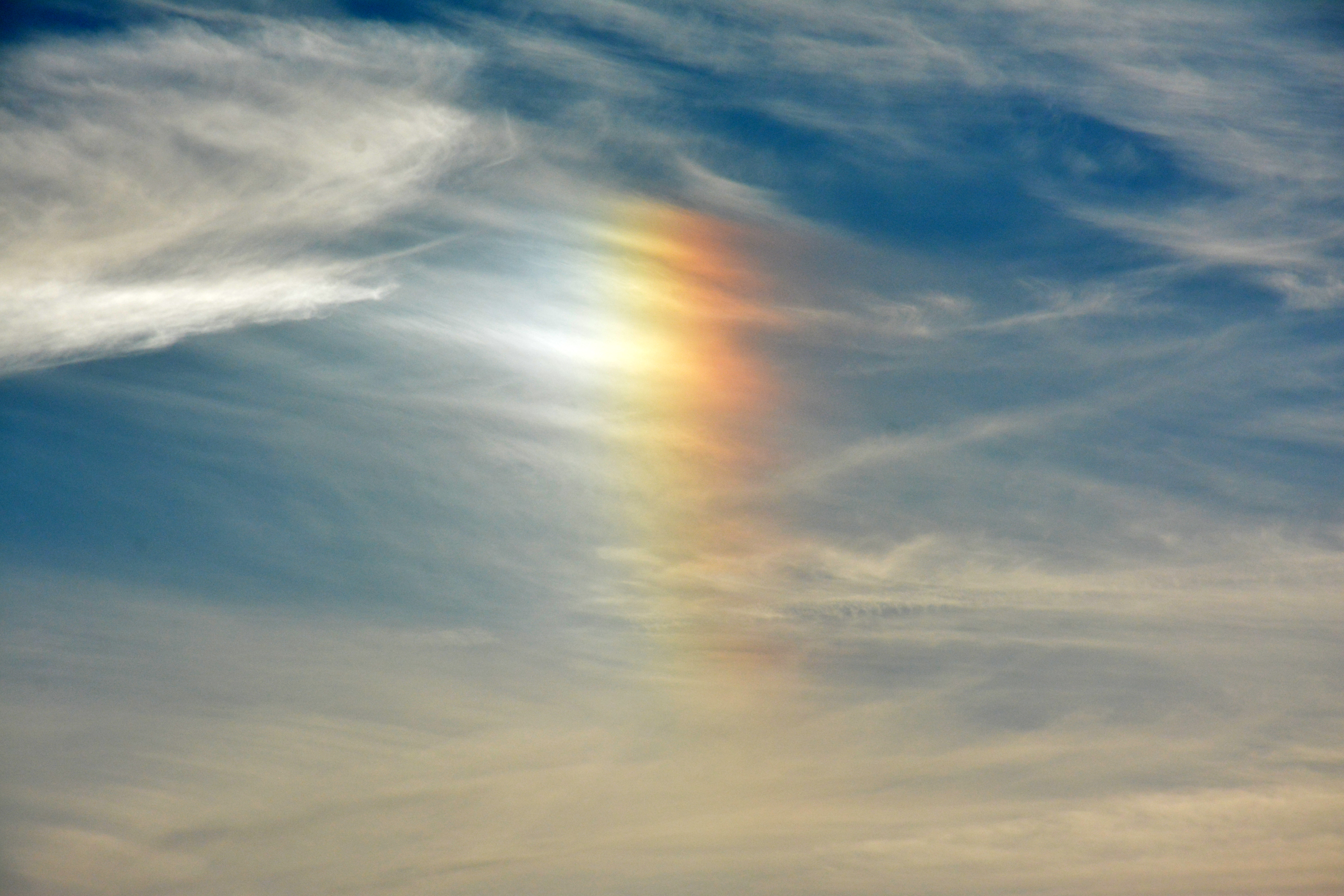
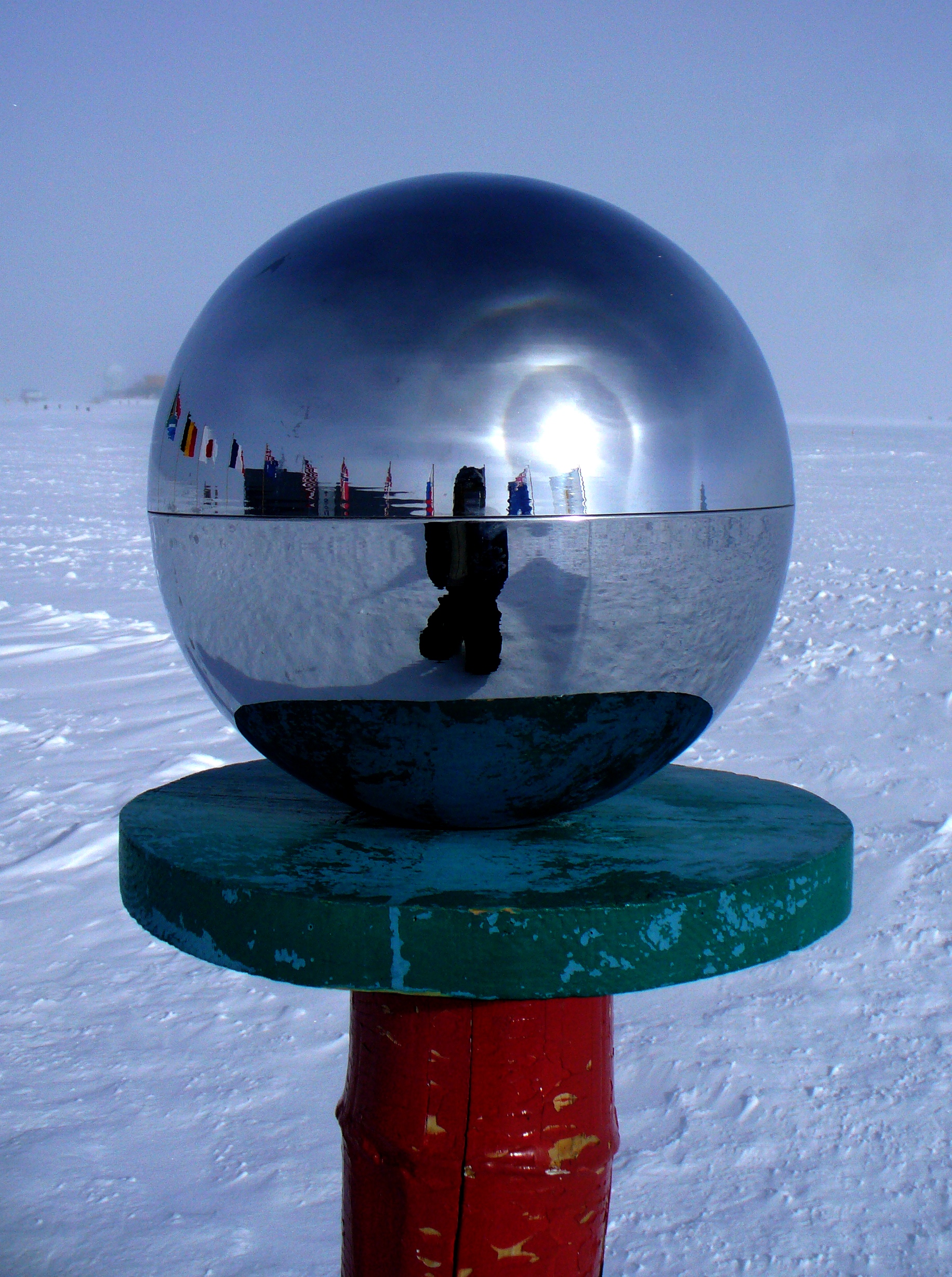
Sun Dogs

Gopherboy6856 - Public Domain

Gopherboy6956 – Public Domain

Cloud of the Day – Sun Dogs

Many of the optical effects in meteorology, such as halos around the Sun and Moon, are the result of the way light interacts with ice crystals. Rainbows are a different matter. They’re the result of light reflecting back to you from inside water droplets. But sun dogs, parahelia in the argot, are caused by the refraction of sunlight (or moonlight) in tiny ice crystals high in the atmosphere.

Jud McCranie - CC-BY-SA

Jud McCranie – CC-BY-SA

Amble - CC-BY-SA

Amble – CC-BY-SA

Because light refracts about 22 degrees passing through ice, the sun dogs appear about 22 degrees on either side of the Sun (or Moon.) Because red light refracts the least and blue the most, sun dogs are redder closer to the source and bluer farther away. The Wikipedia article contains some interesting discussion of the etymology of the term.

The best time to see sun dogs is when a weather system is approaching. The first clouds to appear are the highest, cirrus. The form cirrostratus gives the best show, its thin, even layer of ice crystals creating a perfect canvas for the light.

Denali National Park and Preserve - CC-BY

Denali National Park and Preserve – CC-BY

All of the images are linked to their larger originals.

rjb

Posted in Uncategorized | Tagged , | 1 Comment

Alien Life on Titan

Photo credit - Cornell University Photography

Photo credit – Cornell University Photography

I thought I had published this article on solvent as the medium for life. I guess I was wrong. Today I was reminded of it by this article about some scientists who are trying to figure out what kind of life could evolve in liquid methane on Saturn’s moon Titan.

From the Eurekalert article:

“. . . many astronomers seek extraterrestrial life in what’s called the circumstellar habitable zone, the narrow band around the sun in which liquid water can exist. But what if cells weren’t based on water, but on methane, which has a much lower freezing point?”

“The azotosome (the material proposed for cellular life in liquid methane) is made from nitrogen, carbon and hydrogen molecules known to exist in the cryogenic seas of Titan, but shows the same stability and flexibility that Earth’s analogous liposome (the basis of our water based cells) does.”

The azotosome - Credit - James Stevenson

The azotosome – Credit – James Stevenson

And here’s my five year old article called “Solvent.”

On Earth the ultimate solvent is water. It lies on the planet in great swaths, covering almost three-quarters of it. But it doesn’t just lie there. It circulates around the continents in huge streams and mixes itself in small eddies. And it doesn’t just move horizontally. Water rises up into the atmosphere as a vapor and spreads out over the globe. In the air, water can take many forms. It can remain a vapor or it can condense out in tiny droplets or ice crystals, which can float in the atmosphere almost indefinitely. All the water will eventually complete the cycle many times over the eons, though. It will condense into drops or flakes or pellets and fall, some of it landing on the ground and finding its way back to the sea. While it’s doing all this it’s also acting as a solvent. Everywhere it goes it’s carrying all sorts of things that have dissolved in it. Water holds lots of interesting molecules that can engage in some creative acts of chemistry. And where there’s chemistry there are the raw materials for life. On Earth liquid water is the solvent that makes it possible.

The nagging question of whether there’s life on Mars hinges on the existence of water, preferably liquid, to support it. Were there Martian seas in the past? Is there water underground now? We know the planet has water thanks to the obvious polar ice caps, but we’re not sure if there’s enough to maintain a biological system. There’s encouragement in the fact that life exists on ice here on Earth. If Mars has plenty of permanent ice underground it might have a subterranean biosphere.

Farther out there are moons of Jupiter and Saturn that probably have global oceans under thick crusts of ice. Does any interesting chemistry happen there?

Also orbiting Saturn is a cloud-shrouded moon called Titan. It’s a large moon, about fifty percent bigger than our own, and bigger than the planet Mercury. Probes sent from Earth have studied it and found that it has plenty of useful molecules in its atmosphere and on its surface. It also has liquid methane oceans, lakes, rivers and rain. What kind of chemistry would go on there?

We’ve tacitly assumed that extraterrestrial life would be found, if at all, in the presence of water. Now some biologists are wondering if water’s required. Maybe some other solvent like liquid methane would do. While water is the ultimate solvent here, elsewhere it could be something else.

rjb

Posted in Uncategorized | Tagged , | Leave a comment