Whispering Galleries

Mapparium in Blue

Mapparium in Blue

A whispering gallery is defined as “a space beneath a dome or arch in which sounds produced at certain points are clearly audible at certain distant points,” in the Free Dictionary, a free online dictionary.

Wikipedia, the free online encyclopedia, defines a whispering gallery similarly: “a gallery beneath a dome or vault or enclosed in a circular or eliptical area in which whispers can be heard clearly in other parts of the building.”

HR MacMillan Science Centre

HR MacMillan Science Centre

There are many examples of whispering galleries around the world, some natural, some artificial constructions. The viewing areas in planetariums generally have a projection dome on top of a circular wall. The whispering can be heard around the inside of the wall. Sometimes you can hear people on the opposite side of the room better than you can hear your neighbor.

Large buildings and public spaces dominate when it comes to finding whispering galleries in human structures. Buildings that serve more than a utilitarian purpose, where the costs can be justified for pride or beauty, are good candidates. Churches and other large public buildings often have superfluous structures in them, like domes and arches. Large, curved surfaces make the best galleries.

The Grand Central Oyster Bar

The Grand Central Oyster Bar

Grand Central Station, a New York railway station built when monumental was the word, is such a building. In it is an oyster bar called the Grand Central Oyster Bar, which is entered via an arched hallway. People in opposite corners of the hallway can hear each other whisper.

Saint Paul's Cathedral

Saint Paul’s Cathedral

Saint Paul’s Cathedral in London has a dome. The current Saint Paul’s does, anyway. The original one, built of wood by the Saxons and lost to fire in 675, didn’t. Neither did any of the many incarnations of the cathedral built over the next thousand years on the same spot. The present version, completed in 1708, was designed by Christopher Wren and is the first to have a dome. From ground level one must climb 259 steps before entering the dome. Once inside, the whispering gallery effect can be heard.

The Mapparium

The Mapparium

The Mapparium, in Boston, goes beyond arches and domes. It’s a stained glass globe, fully enclosed in all dimensions. All points share acoustical effects with at least one other point. It was built in 1935 and shows the Earth’s political boundaries in stained glass. People can walk on a glass sided bridge right through the center and look out through a map of the world all around them.

William Hartmann at the Mapparium

William Hartmann at the Mapparium

Physicist William Hartmann and his team have recorded many acoustical effects in the sphere. There is the classical whispering gallery, where people on opposite sides in the structure can hear each other. There are places where sounds are amplified or muted. A sound source moving away across the bridge can seem to flip back and forth from ear to ear.

I can’t think of a nicer place for an acoustically-inclined person.

rjb

Posted in Uncategorized | Tagged , | 3 Comments

Conspiracies Flow Chart

Crispian's Conspiracy Flowchart

Crispian’s Conspiracy Flowchart

I don’t think I have the kind of brain that can truly appreciate the deep intricacies of this. Maybe someone can help me out? The original is here if you’d like to go have a look. I don’t know. It just makes me dizzy.-)

rjb

Posted in Uncategorized | Tagged | 2 Comments

Getting Down

Photo credit - tjmwatson

Photo credit – tjmwatson

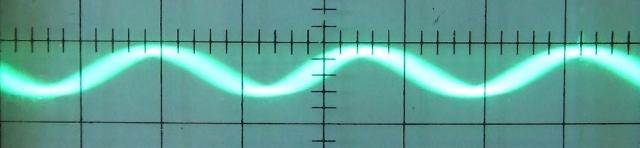
Speaking of infrasound, have you ever wondered about the lowest sound? Is there a lowest sound? Is it even reasonable to think about a lower limit to the frequency of sound?

Definitions first. I will define sound as pressure waves in a medium. That is, sound is mechanical oscillations in an elastic medium. The medium, such as air or water or steel, is pushed in one direction by pressure, then falls back elastically in the other direction before being pushed again. The frequency at which it oscillates determines the pitch of the sound. When middle C is played on a piano, for instance, its string vibrates 261.626 times per second, pushing the air at that frequency and jiggling your earbones at the same pitch. In so-called scientific pitch notation, middle C is set at 256 Hz, which is much more convenient because it makes all Cs round numbers in binary arithmetic. We don’t need to worry about the difference. And for the record, yes, there is sound even when no one hears it.

An interesting note about sound is that it requires a certain minimum space in which to form. If a sound wave is ten meters long, it can’t form in a five meter room, so you won’t hear it. This gives us a clue about our original questions about the lowest possible sounds. If there is a limit, it will depend on whether or not the universe is finite in size. If it is then yes, there is a lowest possible sound frequency with a wavelength equal to the size of the universe.

lowest-noteThe lowest note discovered so far was found ten years ago by astronomers using the Chandra X-ray Observatory, a space-based telescope. They have observed ripples in intergalactic gas clouds surrounding the cluster of galaxies they call Perseus. They’re definitely pressure waves, alternating higher and lower pressure. If you had a big enough ear you’d be able to hear a B-flat fifty-seven octaves below middle C. That doesn’t sound like much until you realize that for every octave you go down, you double the wavelength. When you’re doubling like that it doesn’t take long to get really big. The frequency of this note isn’t measured in Hz, or cycles per second. It’s measured in cycles per ten million years, so you might get a little restless waiting for the concert to end.

Now that’s infrasound.

rjb

Posted in Uncategorized | Tagged , | 1 Comment